

Vertex
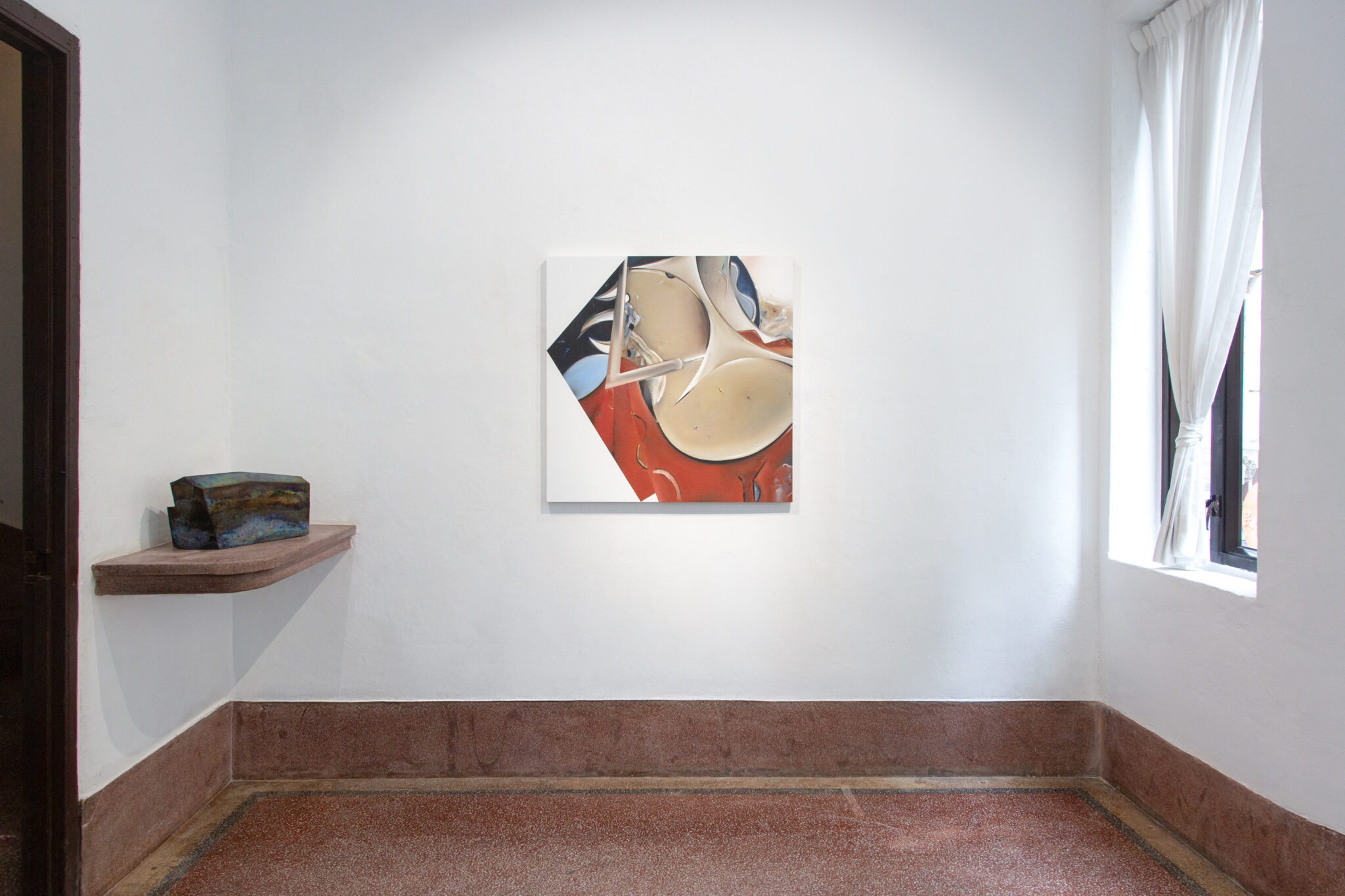
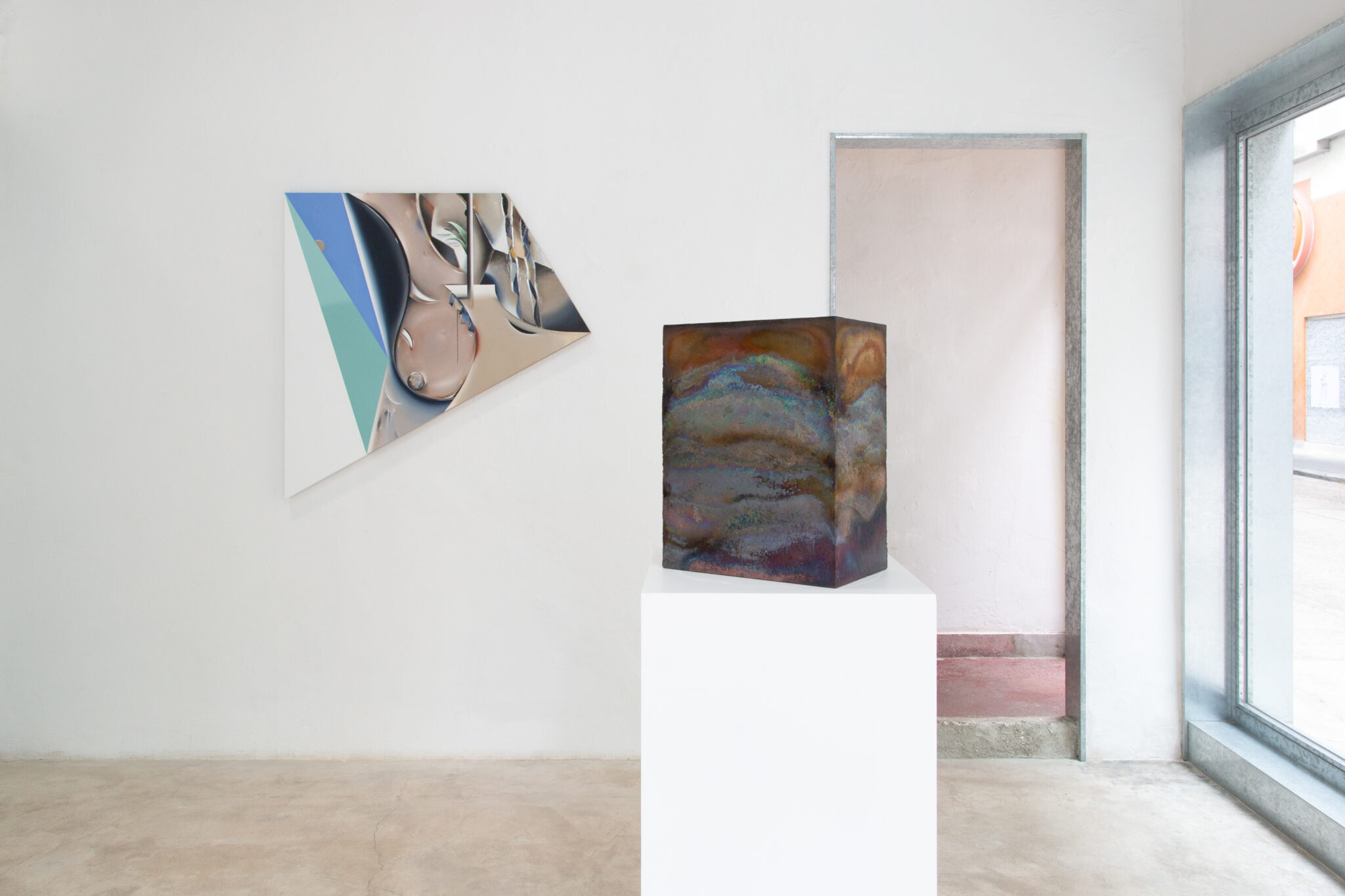
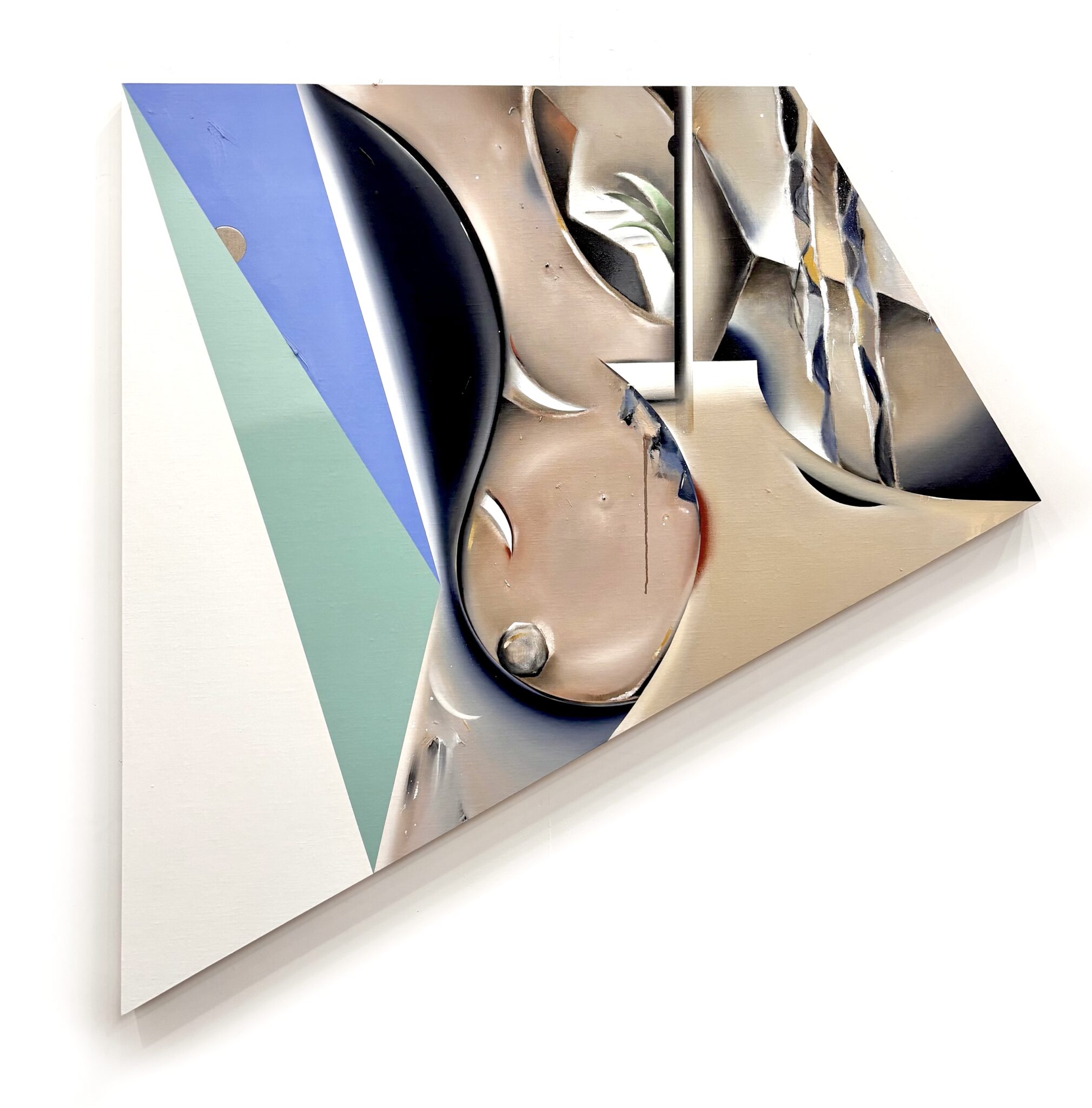
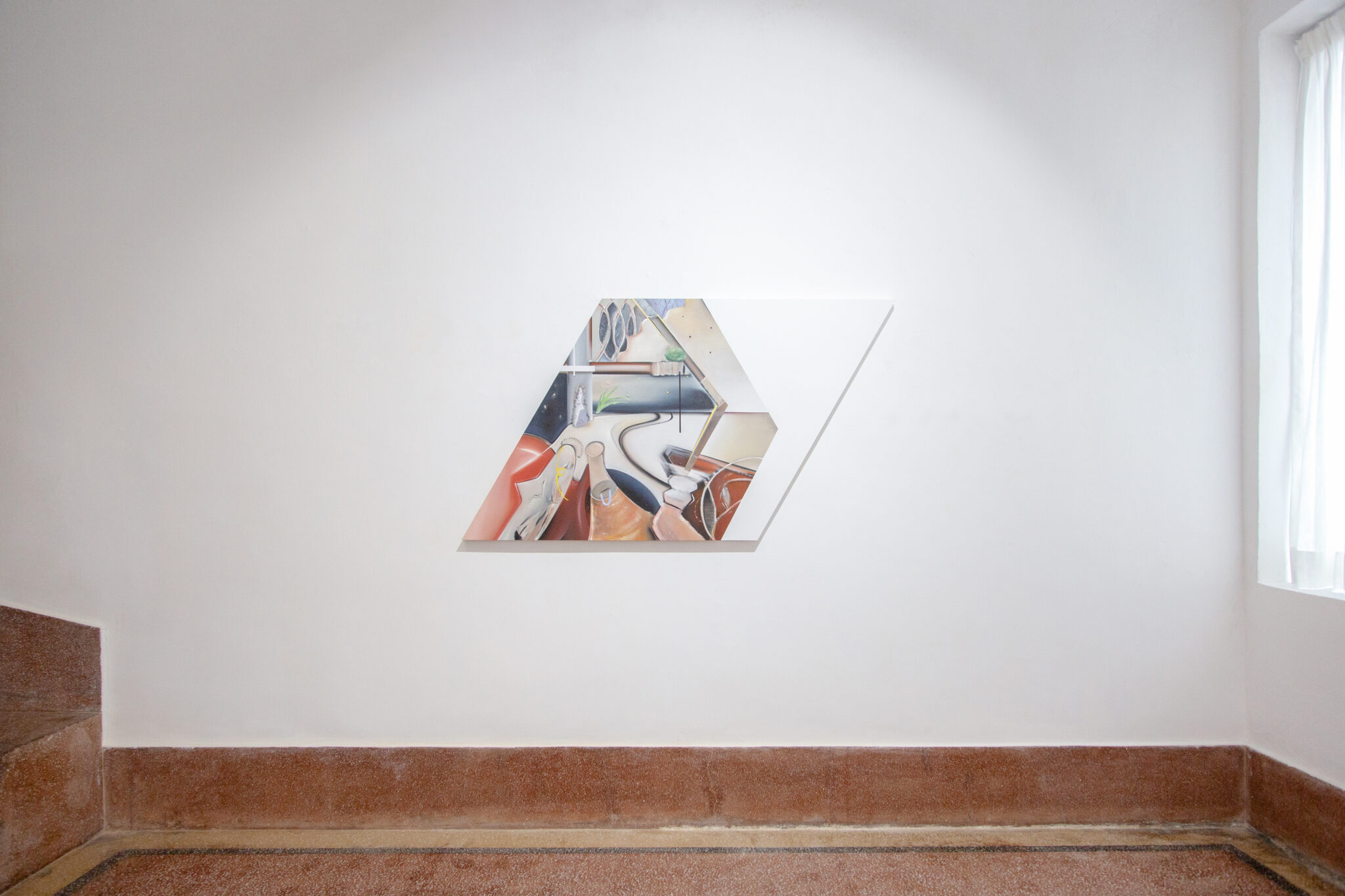
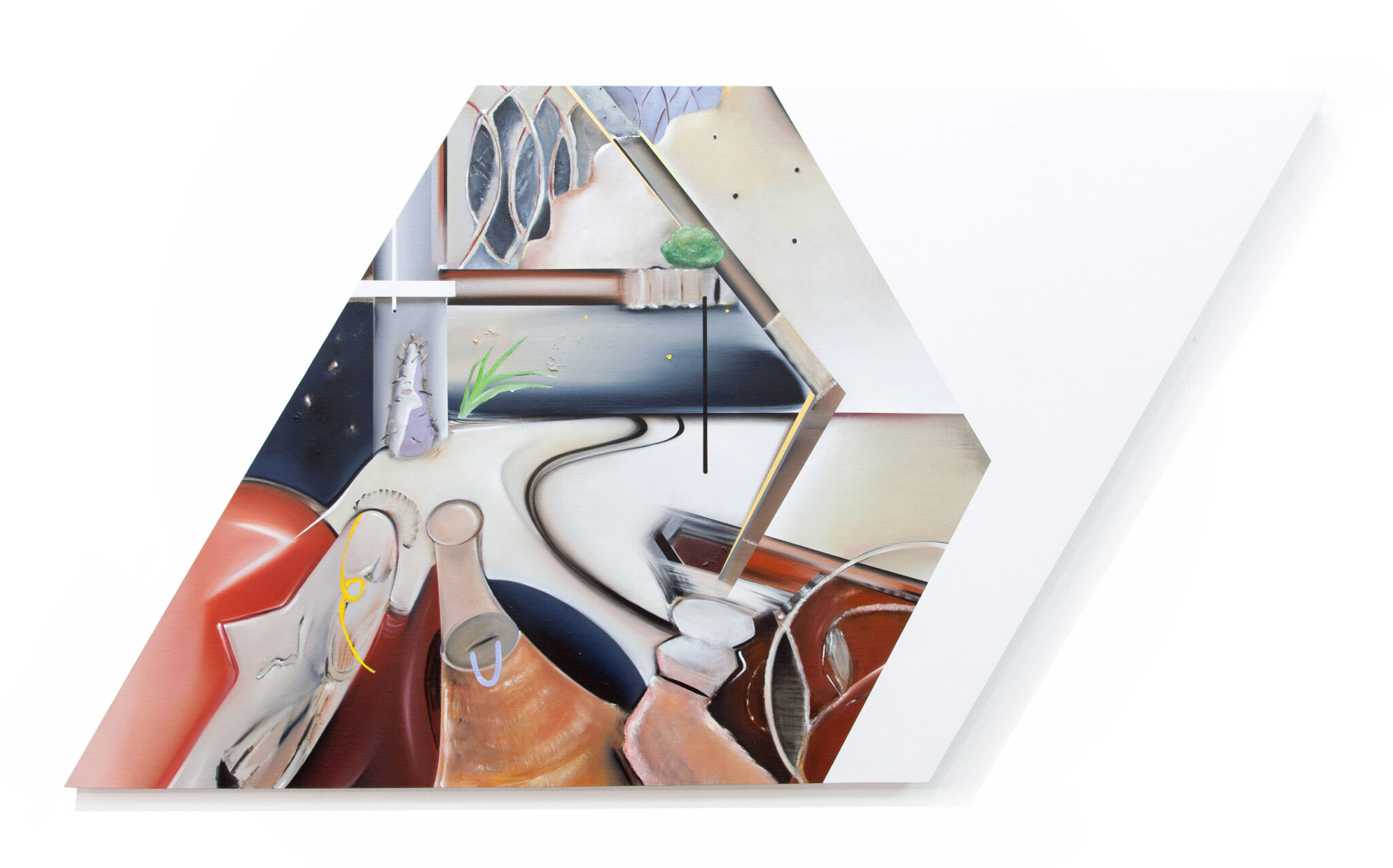
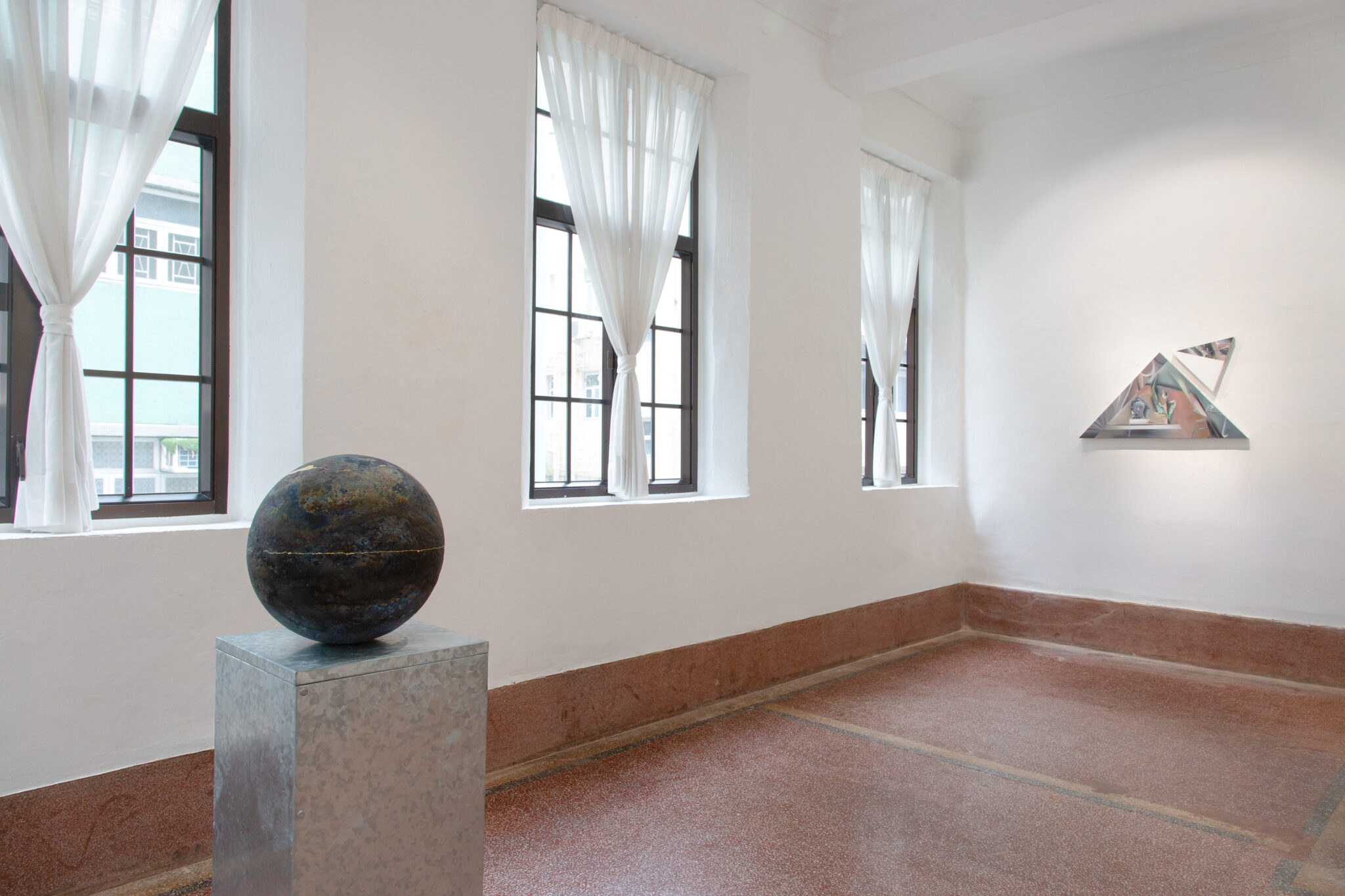
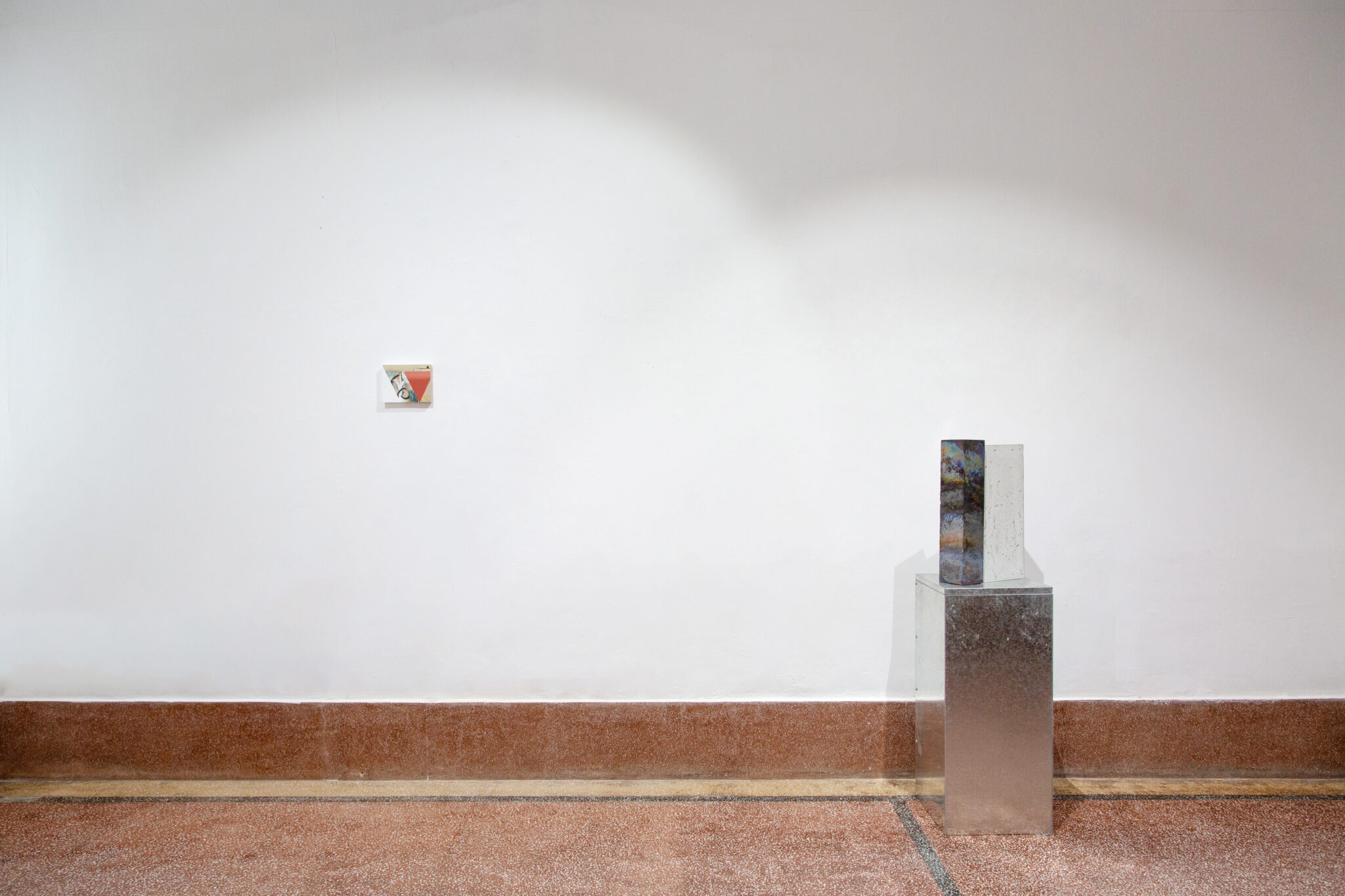


Where pigment meets clay, where brushstrokes converse with kiln fire, THE SHOPHOUSE is pleased to present duo exhibition Vertex by two Japanese artists, showcasing a profound dialogue between two distinct artistic lineages: Yui Samejima’s painting, which explores how perception brings forth meaning and the world, and Tomonari Hashimoto’s ceramic sculpture, born from the earth and imbued with introspective philosophy.
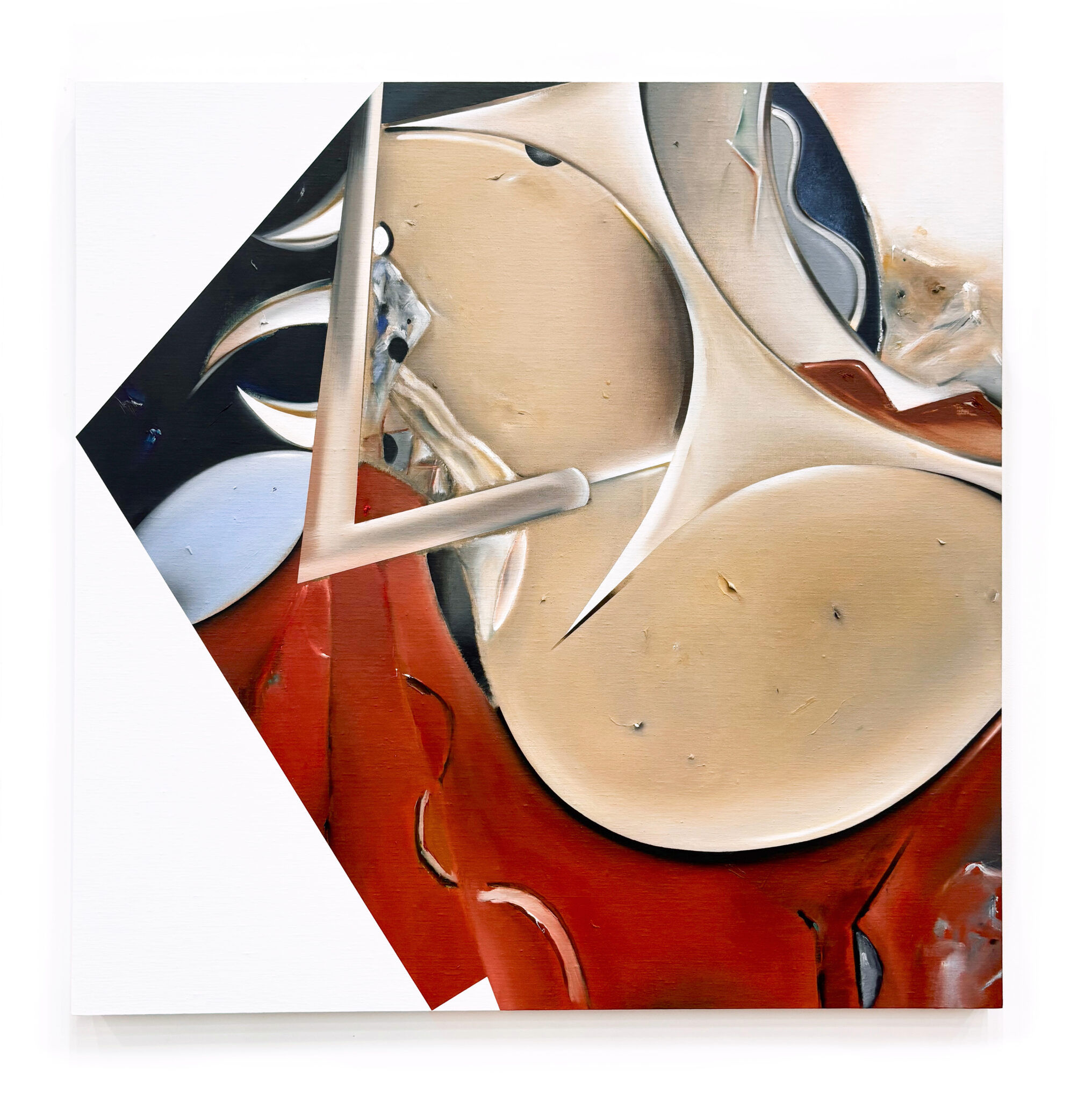
Vertex signifies a point of convergence——where separate trajectories meet to form new perceptual ground. Samejima’s painting begins with an inquiry into the mechanisms of perception and the conditions under which the world appears. Grounded in the understanding that we do not perceive reality directly but construct subjective worlds by supplementing fragmentary sensory information, she approaches painting as a generative field in which seeing and appearing intersect. On canvas, she assembles fragmentary forms—from perceptual impressions to historical traces—allowing prediction and sensation to collide, interweave, and coalesce.
Rather than restoring a coherent whole, her compositions foreground fragmentation, margins, and absences as generative conditions. Heterogeneous elements coexist without resolving into fixed meaning, reflecting the fundamental structure by which perception integrates incomplete information to construct a world. Depth and continuity are subtly unsettled, and the image occupies an intermediate state that resists clear distinctions between abstraction and figuration. In this indeterminate space, the viewer’s gaze continually recalibrates, actively supplementing what is seen. The canvas thus becomes a field where meaning emerges provisionally—mapping the dynamic processes through which perception gives rise to experience.
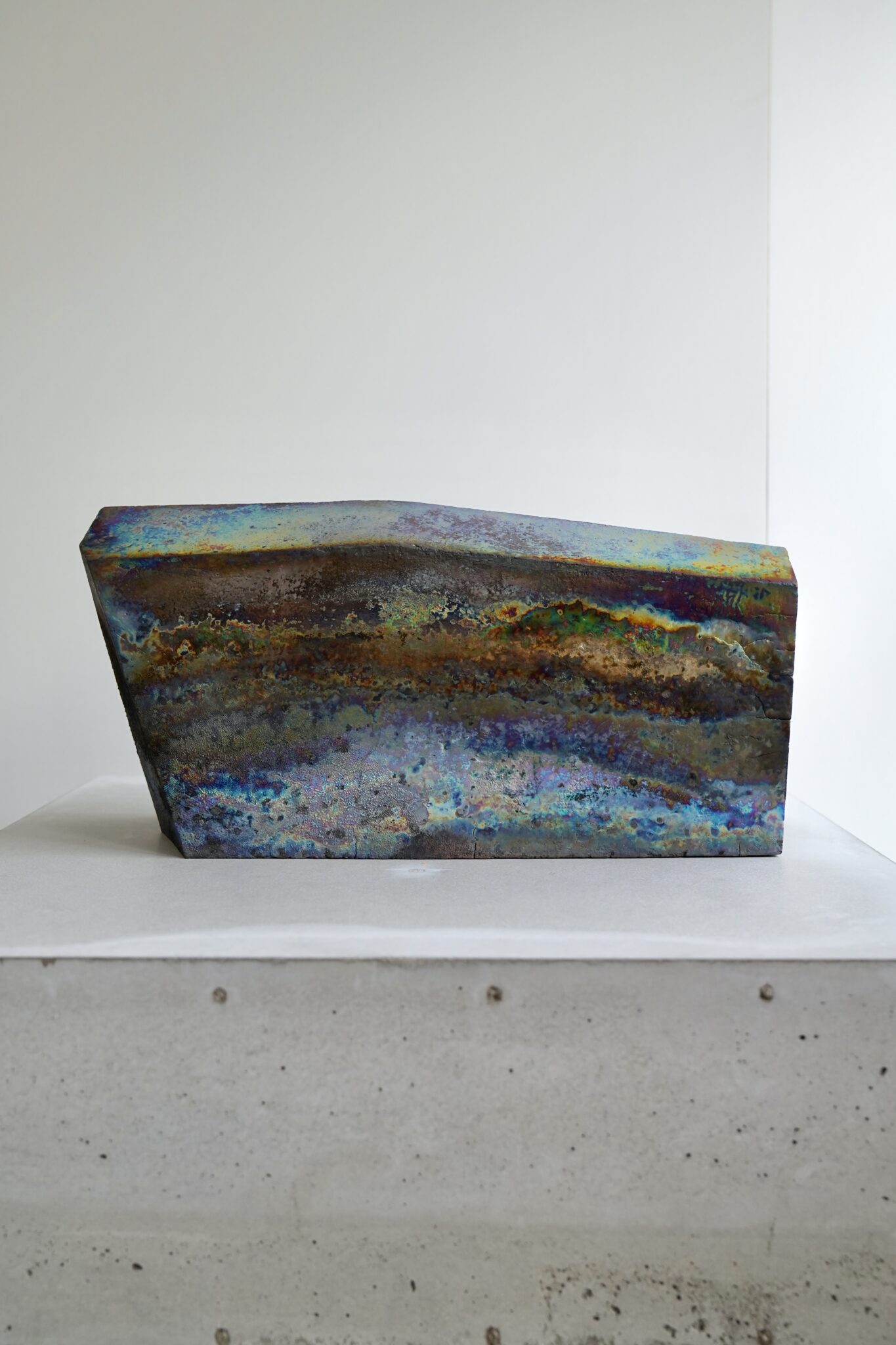
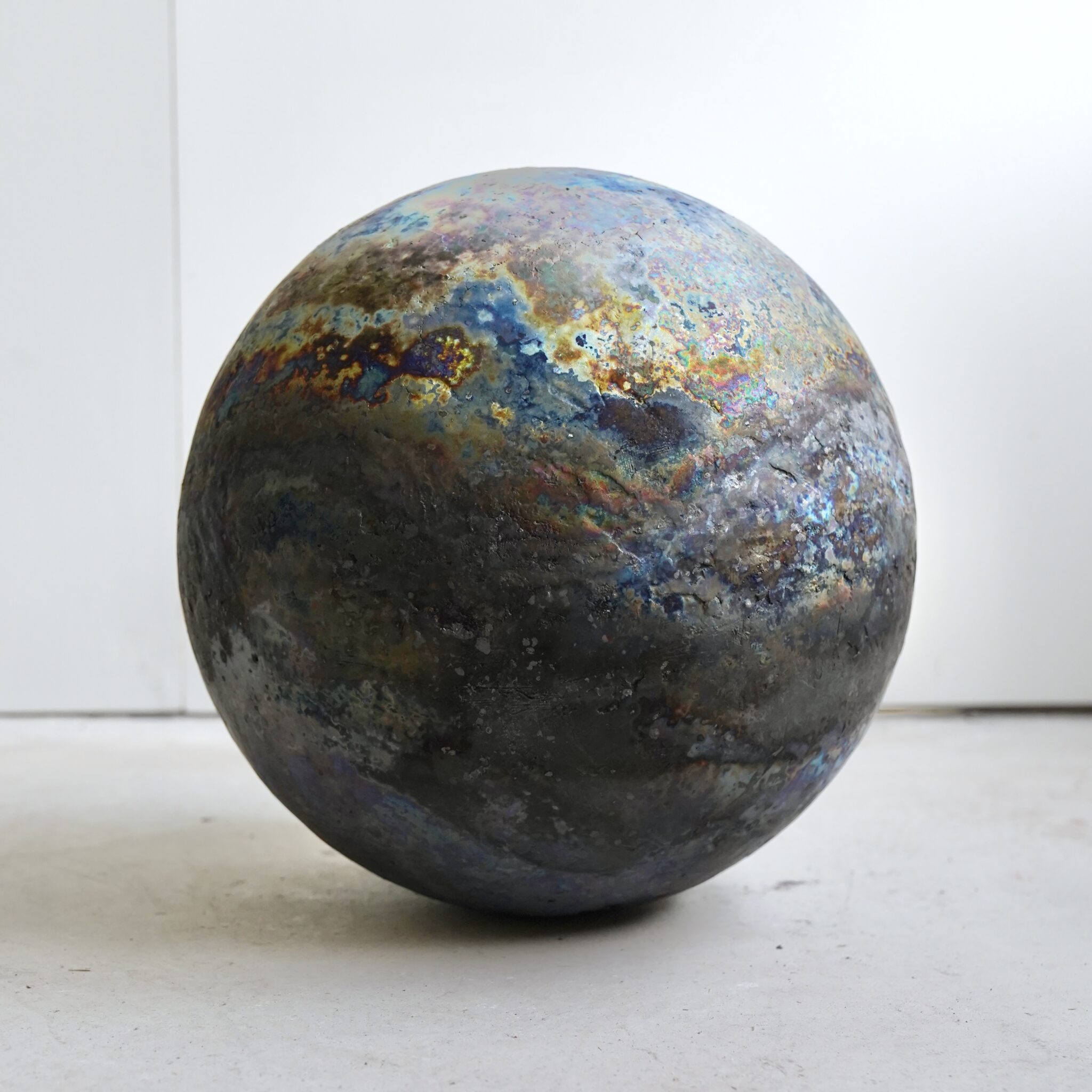
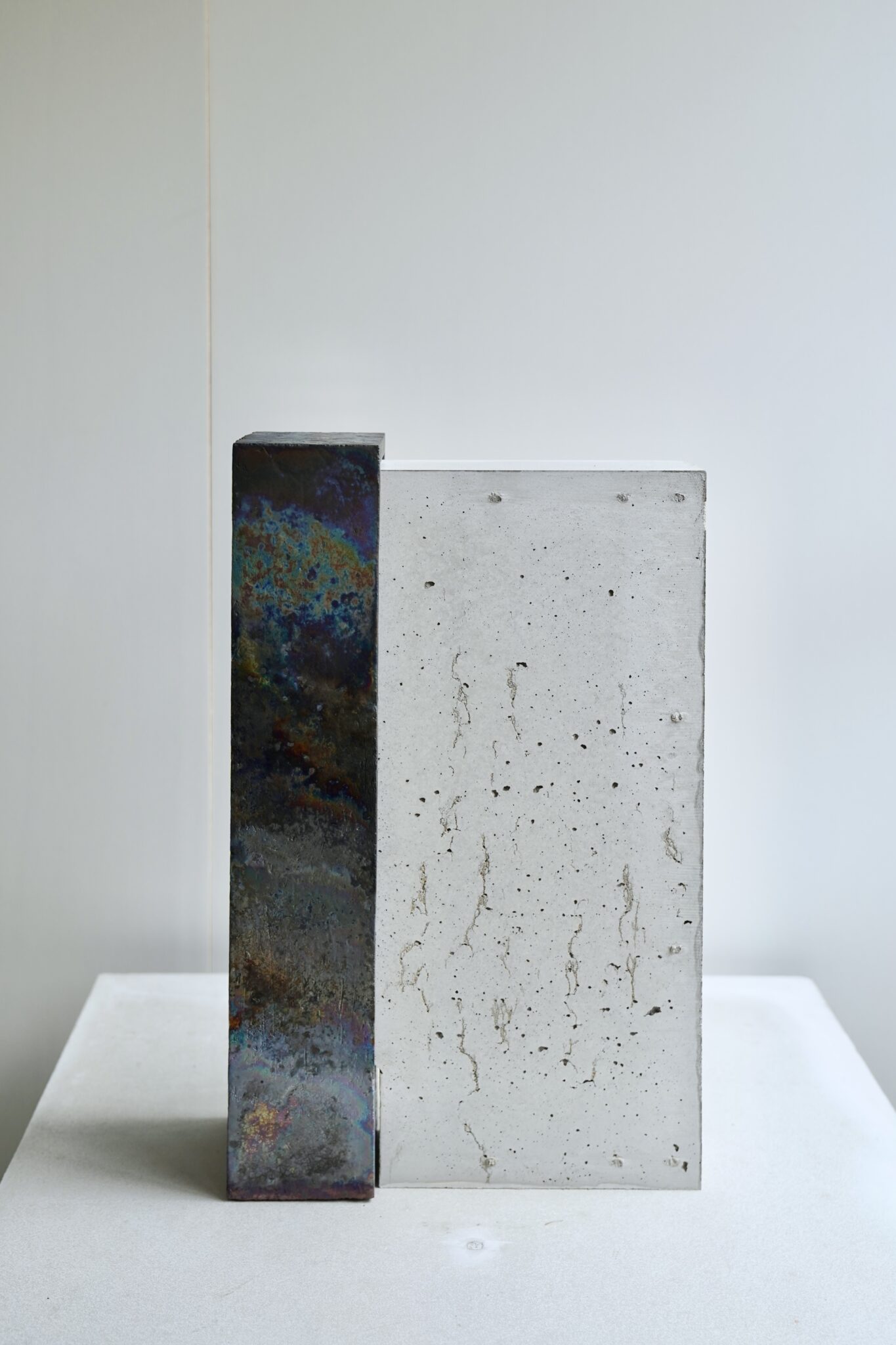
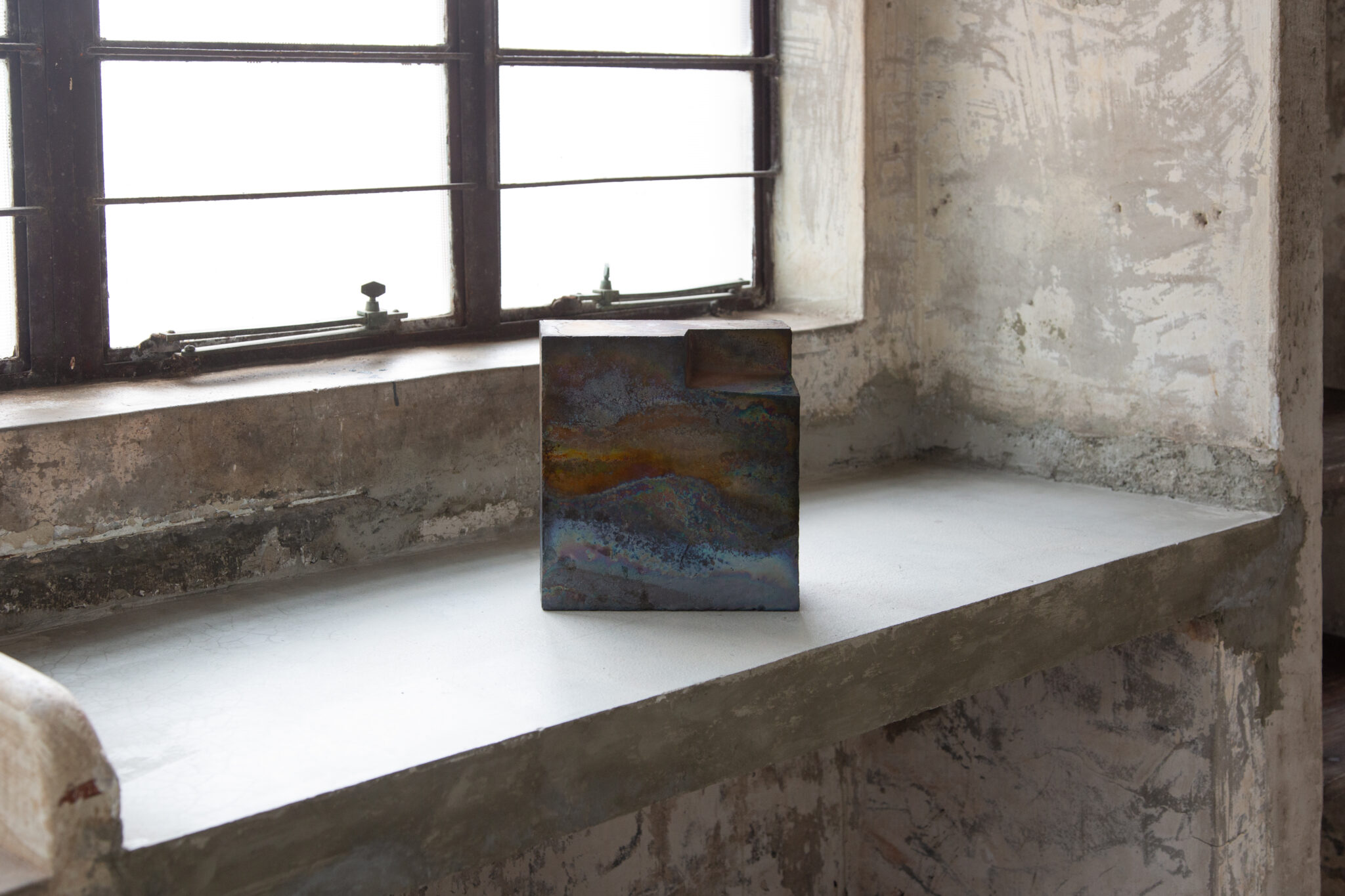
Tomonari Hashimoto’s practice is an inward material expedition. Based at Shigaraki in Japan, he embraces the challenge of large-scale sculpture, at times building dedicated kilns for single works. The rich, profound colors on his pieces come from his specially formulated iron oxide glazes—the color of the earth, yet seemingly condensing the spectrum of mountains, oceans, and all things. These vessels, forged from clay, water, and extreme kiln fire, with their cracked textures and monumental forms, serve as vehicles for introspective philosophy and can be understood as a condensed, encapsulated universe. His ceramics echo geological time, a testament to the stubborn, enduring presence of material existence itself.
Their meeting is a resonant alignment. A shared fascination with texture as a record of time and form as a process of emergence provides the common ground. The layered, fragmentary phenomena in Samejima’s paintings find an echo in the stratigraphic textures of Hashimoto’s clay; the deliberate margins in her compositions hold a silent conversation with the charged voids contained within his vessels.
In the exhibition, a quiet tension and harmonious balance unfold between transparency and density, fragility and endurance, the shifting construction of perceptual meaning and the condensed expression of the material cosmos. Through this dialogue, a space opens for considering the fundamental processes of creation and perception: pigment breathes on the canvas, probing how the world comes into appearance, while clay holds its breath within the kiln, steadfastly guarding a visible universe that encapsulates all things.


